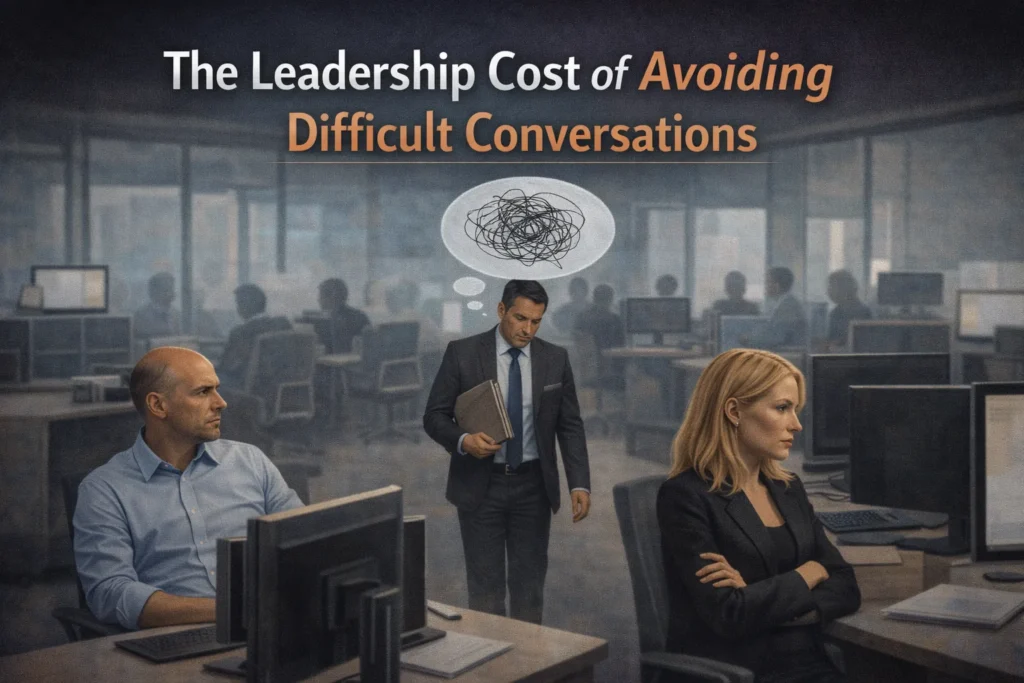
One of the things I love most in the work I do is helping people with reducing their fear of difficult conversations. Not by pretending those conversations are easy (because they are not), but by giving people the insight, language and confidence to stop avoiding them.
On a personal level, some of the toughest conversations I’ve had over the years have shaped me into a much stronger communicator. Those interactions forced me to slow down, get clearer, listen better and take responsibility for how I showed up. Truth is, I didn’t really enjoy them in the moment, but I’m better because of them.
And I’ve seen the transformation in leaders when they do the work and decide they want to do better.
‘Difficult conversations’ is such a broad label and it means different things to different people. But research and leadership data consistently show that there are certain conversations leaders are more likely to avoid, even when they know they shouldn’t.
The ones I hear about most include:
Addressing underperformance
Giving honest feedback that might upset someone
Challenging behaviour from a high-performer
Raising concerns about attitude or impact
Naming tension or conflict within a team
Having conversations about role fit or future suitability
These conversations are all core leadership moments, and yet they’re often delayed, softened, delegated or avoided altogether.
It’s human to avoid discomfort and leaders are not immune to this. Being given a leadership title doesn’t magically make conversations easier or remove emotional reactions. Leaders still worry about damaging relationships, getting it wrong, being disliked, triggering conflict or opening up something they don’t know how to close.
Sure, there can be a cost to having a hard conversation – especially if it is handled poorly. But the cost can be far greater if you avoid the hard conversations.
When difficult conversations are avoided, small issues rarely stay small. They quietly gather weight. What could have been addressed early may become a pattern. A frustration may become resentment. If not addressed, what started as a quiet rumble can progress to a red flag and then to a rupture.
The cost of avoiding difficult conversations?
Performance issues continue and impact on others
Trust erodes, even if no one can quite name why
High performers disengage when poor behaviour goes unchallenged
Leaders can end up reacting later with more intensity that what was required
Teams lose confidence in leadership and disengage
Assumptions are made and stories are twisted
What many leaders don’t realise is that the hardest conversations are rarely the hardest at the start. If they are addressed at the very first sign of a rumble. They become harder because they’re late.
Early action changes everything. This is where perceptive action matters.
In my work with leaders, sales professionals and women in business, I don’t just teach people how to ‘have’ difficult conversations. I help them understand when to have them, why they matter and how to bring together everything they’ve already noticed, interpreted and communicated into a moment of action to actually serve the situation.
It’s about knowing how to notice the early signs.
It’s about knowing how to test your assumptions before you speak.
Its about knowing how to act before the cost escalates.
Leaders who develop this capability don’t avoid difficult conversation, they respect them. They understand that handled well and handled early, these conversations don’t damage trust. They strengthen it.
And that’s the real shift.
This is why my work focuses on building The Perceptive Advantage™ – so leaders move from avoidance to confident action. So they feel equipped to notice sooner, speak more clearly, and act early when it matters most.